Guides
App review
Rejection reading and resubmission notes.
App StoreGoogle PlayPrivacy complianceData SafetyPublishing checklists
TestFlight before App Review
Use TestFlight to validate build consistency, login path, and crashes before App Review.
Google Play closed testing requirements (2026)
Closed testing by account type: tester counts, duration, evidence structure—never forged testers.
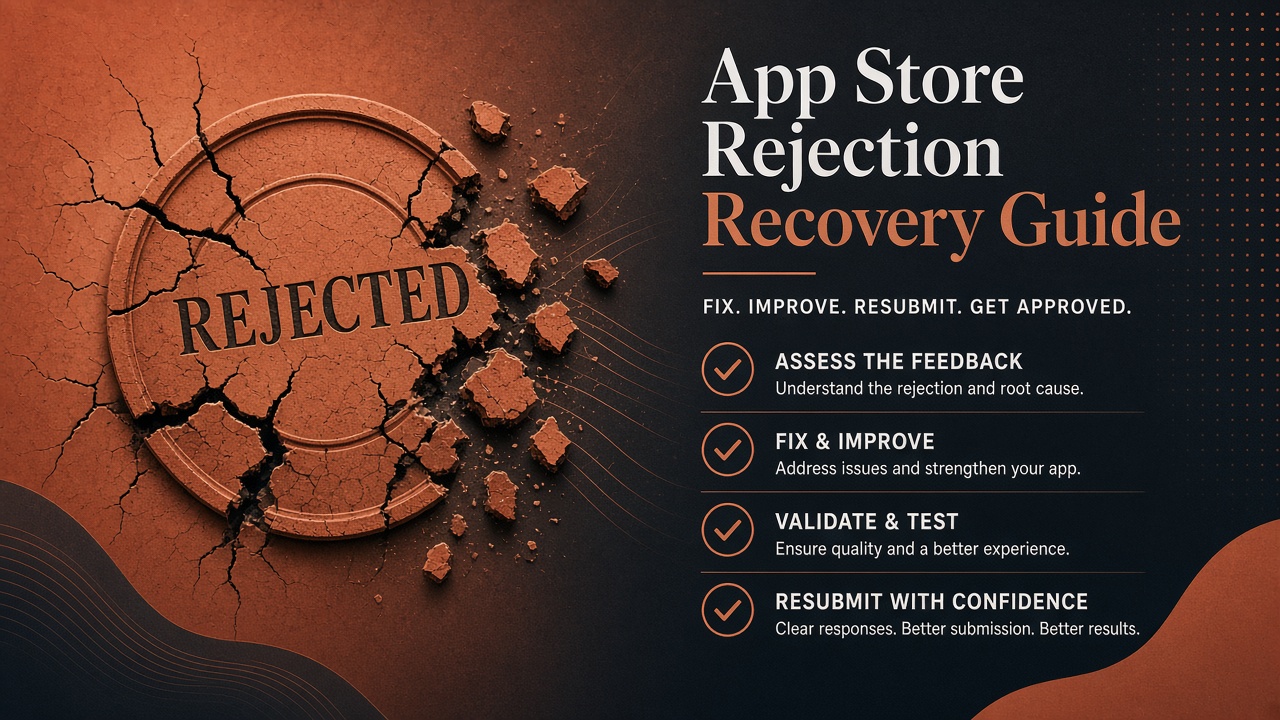
Guideline 2.1 rejection fix plan
Prioritize 2.1 fixes: demo failures, crashes, incomplete information—then resubmit deliberately.
Avoid Play deception / misrepresentation flags
Keep feature copy, screenshots, and Data Safety aligned to the shipped binary.

Demo account and login path for App Review
Prepare a stable demo account—avoid OTP dead-ends, geo blocks, and empty states.
App Store resubmission notes template
Respond clause-by-clause, cite build numbers and material changes—no empty promises.
Google Play rejection clause breakdown
Turn policy notices into prioritized fixes and a resubmit checklist.

Pre-submit QA cross-check list
QA install, login, payments, permission prompts, and listing claims before submit.
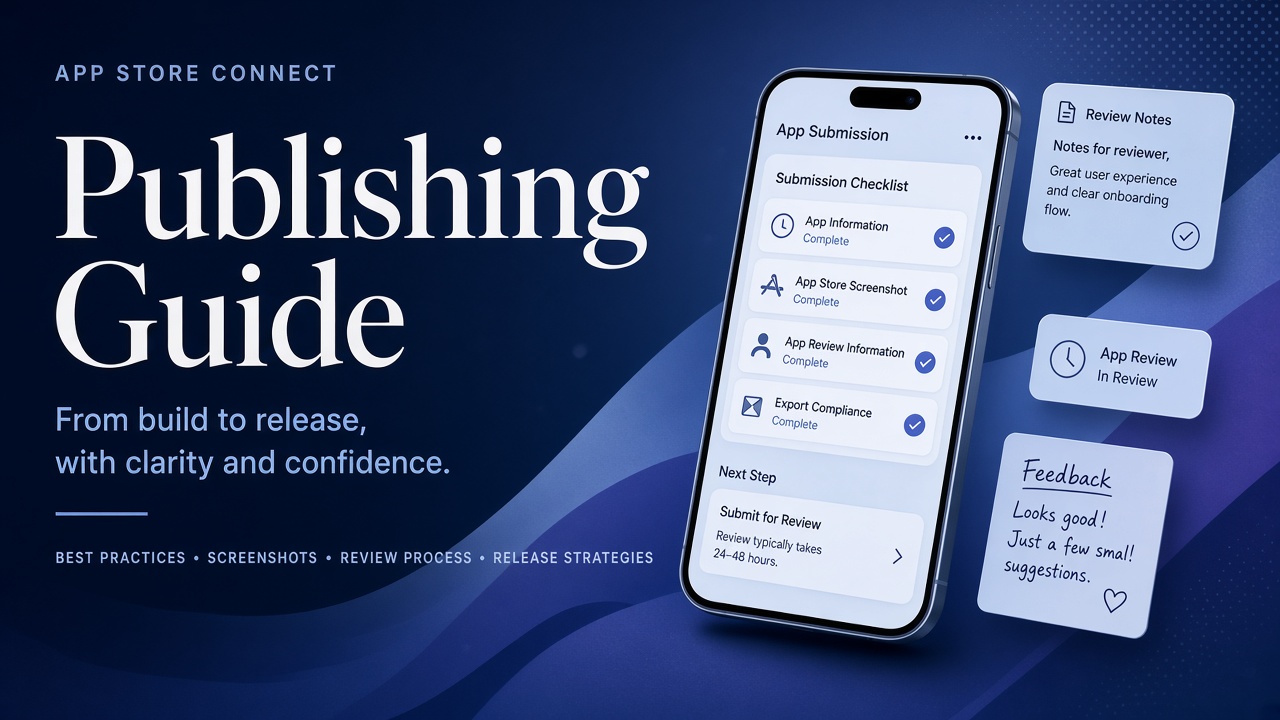
Complete App Review information checklist
What Apple asks for a complete review: concept, demo accounts, external services, hardware video, and regional differences.
12×14 closed testing for personal developers
Play’s personal-account rule: at least 12 opted-in testers continuously for 14 days before production access.
English App Review reply template
Concise Issue / Fix / How to verify replies. Metadata-only fixes may reuse a build; binary fixes need a new build.
External services in review notes
Document auth, payments, AI, and data providers that power core features—and keep them reachable during review.
Crash-free launch before submit
Launch crashes and broken binaries are classic rejects. Stabilize startup and core paths on device/TestFlight first.
Guideline 4.8: when third-party login needs an equivalent privacy option
Map App Review Guideline 4.8: if Google/WeChat/etc. set up the primary account, offer an equivalent login that limits data, hides email, and skips ad tracking without consent.
Guideline 4.2: WebView shells and minimum functionality
Guideline 4.2 expects more than a repackaged website. Use a Safari side-by-side test, native value checklist, and review notes that point reviewers to app-like features.
3.1.1: when digital unlocks must use In-App Purchase
Map Guideline 3.1.1: unlocking features, subscriptions, currency, or paid content inside the app generally requires StoreKit—not side payments or license keys.
Own-account collaboration—not white-package “listing”
Contrast legitimate member-invite collaboration on your developer accounts with white-package transfer schemes that create ownership and takedown risk.
Auto-renew subscription disclosure checklist
Practical checklist for App Store auto-renewing subscriptions: benefits, period, cancel path, trials, and a reviewer-testable purchase flow.
UGC apps: reporting and safety checklist for review
Before submitting UGC apps: reporting entry points, filters, human review, safe demo feeds, and review notes that explain your safety workflow.
Rejection reply workflow (Resolution Center)
After a reject: map the guideline, classify function vs materials, retest the path, then send a short reply with evidence—not a blind resubmit.
Built-in demo mode when credentials are restricted
When law or safety blocks live demo accounts, ship a full-feature review demo mode and document how reviewers enable it.
Team listing handoff package
A shared folder layout for dual-store publishing: roles, builds, screenshots, copy, privacy matrix, test evidence, and review notes—no password sharing.
First-week after approval checklist
After approval: phased release, crash monitoring, review replies, metadata hygiene, and safe update boundaries for week one.